Preventing Maverick Buying: 8 Proven Strategies for Procurement Control

1. Introduction
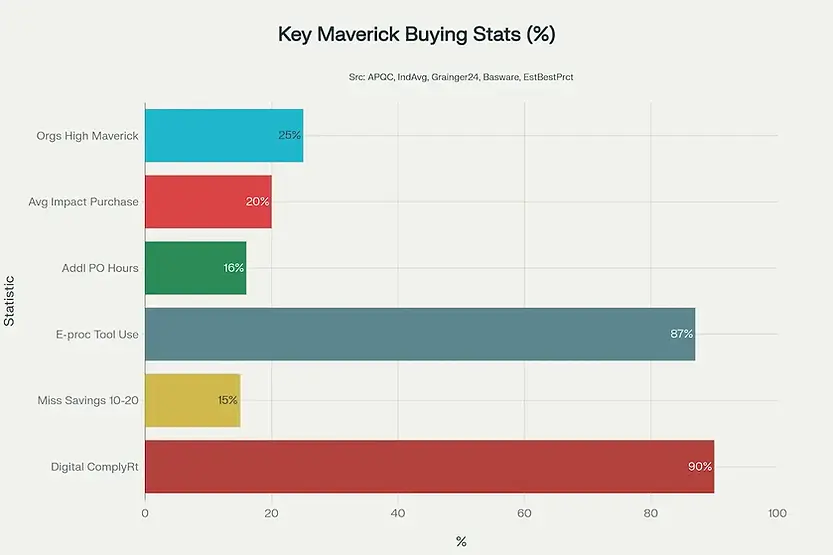
Maverick buying – purchasing outside of established processes – is one of the most costly weaknesses in the indirect procurement of industrial organizations. In many companies, the proportion of non-compliant orders exceeds 20% of the indirect procurement volume. The consequences include increased process costs, unused framework agreements, inadequate spending control, and risks regarding compliance and auditability.
Especially in the area of special requirements, such as tools, IT accessories, or spare parts, such “maverick buying” often arises due to time pressure, system barriers, or unclear guidelines. This article provides eight proven measures that purchasing and finance managers can use to effectively and sustainably prevent maverick buying – without jeopardizing operational efficiency.
Why Maverick Buying will be even more expensive in 2025
Unplanned orders not only cost you better terms – they lengthen processes and increase compliance risks. According to APQC, companies with ≥ 2.5% maverick spend have 16 more process hours per order than best-in-class organizations. At the same time, companies lose an average of 10–20% of their negotiated savings due to unplanned orders, according to Basware analysis.
Preventing Maverick Buying – A Brief Overview for Decision-Makers
- Maverick buying causes significant cost and compliance risks in indirect purchasing, especially for special needs in industrial companies.
- Specialized platforms like FACURA enable system-compliant procurement from any online shop – without new creditors or IT effort.
- Binding purchasing guidelines, automated approval workflows and integrated supplier catalogs increase regulatory compliance and user acceptance.
- Rule-based expenditure controls and continuous compliance monitoring ensure budget adherence and make rule violations visible and controllable.
- Strong procurement governance anchors purchasing expertise within the company, creates strategic control capabilities and eliminates maverick buying in the long term.
2. What is Maverick Buying?
Maverick buying refers to the procurement of goods or services without adhering to established purchasing processes, e.g., without placing an order in the ERP system, without reference to existing supplier contracts, or without approval. Orders are typically placed via email, telephone, or credit card – bypassing systems, framework agreements, and purchasing guidelines.
How e-procurement stops Maverick Spend
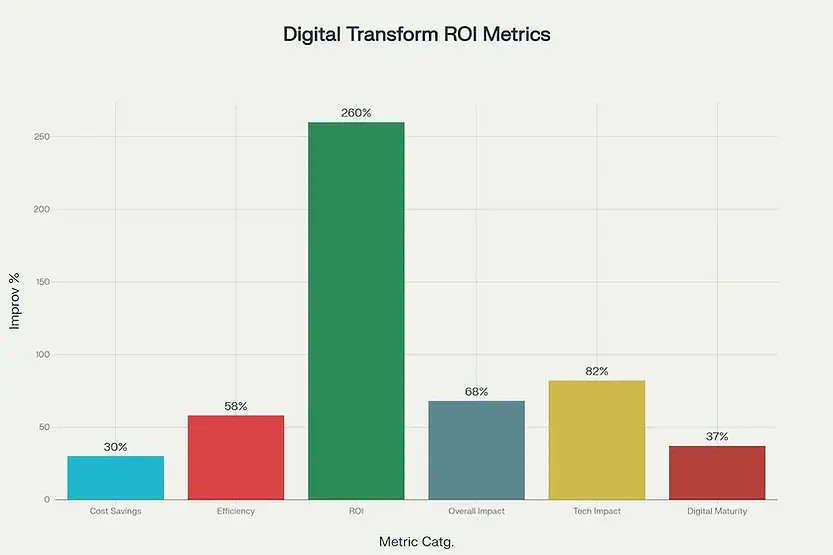
A 2024 Grainger B2B study shows that 87% of surveyed MRO buyers already use e-procurement tools. According to the Hackett Group, companies that fully digitally manage their indirect spending achieve 30% lower process costs and 58% shorter procurement cycles.
Quick wins for practical application
| lever | Effect |
|---|---|
| Guided buying & punch-out catalogs | Reduce Maverick spend by up to 55% within 12 months |
| Automated approvals | Increase compliance rate to ≥ 90% of transactions |
| Real-time spend analytics | Companies with high spend visibility reduce total spending by an average of 5.8%. |
Causes:
- Insufficient system integration
- Lack of user-friendliness in e-procurement
- Unclear responsibilities and guidelines
- Lack of suppliers for rare needs
Consequences:
- Higher prices due to lack of binding terms and conditions
- Increased processing costs due to manual processing
- Lack of traceability and risks during audits
- Inconsistency in supplier contracts and payment terms
The goal of any effective purchasing organization must therefore be the consistent prevention of maverick buying through structural, systemic and procedural measures.
Suppliers streamline instead of flooding the registration process
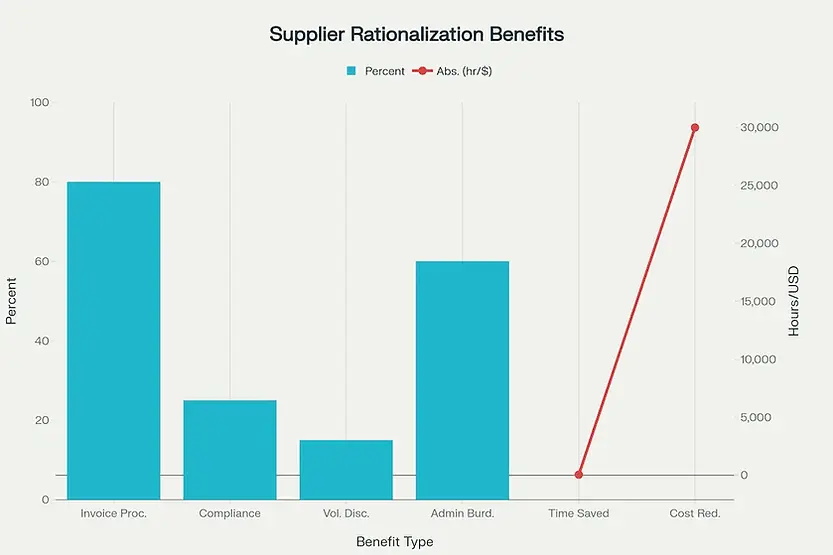
companies can achieve companies can achieve The proliferation of indirect creditors generates high auditing costs. A BME case study shows that companies can achieve 80% fewer invoices and 40 hours of administrative time savings per month by consolidating their supplier base.
Best practice steps
- Spend analysis to identify overlapping suppliers
- Grouping categories and negotiating volumes (Economies of Scale)
- Utilize single-creditor models – for example, FACURA as a “1-creditor gateway” for thousands of online shops (see original article section)
AI-powered compliance monitoring
70% of C-level executives see compliance risks as the top external factor in purchasing. Digital World-Class teams utilize Gen-AI-based monitoring and achieve a 2.6x ROI compared to traditional setups.
Algorithms check orders against framework agreements, suggest cheaper alternatives and block unauthorized suppliers in real time.
ESG and Reg-Fit without additional effort
EU directives such as CSRD and LkSG enforce complete supplier and spend transparency. According to a Unite study from 2025, 40% of European companies still manage indirect procurement using Excel – a compliance risk. Platform-based services provide standardized CO₂, LkSG, and sanctions checks by default, relieving the burden on specialist departments.
Change management: Acceptance instead of coercion
Coupa Benchmark 2024 shows: Projects rarely fail due to technical issues, but rather 70% of the time due to a lack of user acceptance. Success factors:
- Clearly communicated policy benefits (time savings, self-service)
- Role-based UX instead of one-size-fits-all
- Gamified training with KPI feedback
KPI Cockpit: From Reacting to Controlling
Key performance indicators for indirect procurement in 2025:
| KPI | Target value | To use |
|---|---|---|
| Spending under control | ≥ 80% | Greater negotiating power & lower risks |
| Maverick Spend Quote | ≤ 1% | Direct savings & audit security |
| Three-way agreement rate | ≥ 95% | Prevents price/quantity discrepancies |
| Digital PO cycle time | < 8 h (median) | Fast delivery, high user satisfaction |
Roadmap to sustainable procurement governance
- Current state analysis: Spend streams, processes, systems, policies
- Establish a digital core: Procurement suite or single-creditor service (FACURA)
- Supplier & Catalog Enablement: Ensuring data quality, consolidating terms and conditions
- Scale analytics & AI: Detect deviations, price leaks, and ESG risks live.
- Continuous Improvement: KPI reviews, policy refresh, training.
3. Strategies for avoiding maverick buying
3.1. Use procurement solutions that simplify processes
Approach:
Many maverick buying cases arise from pragmatic workarounds: employees procure products themselves because using the ERP system is too complicated, the selection too limited, or the need too urgent. This is where specialized platforms like FACURA come in: they enable the procurement of products from any online shop through a single vendor – fully integrated into existing processes.
Effects and benefits:
- Operational relief: No more supplier onboarding for individual requirements
- Compliance assurance: Orders are placed via the official process
- Increased efficiency: 1 creditor, 1 invoice, standardized documents
- Low entry barriers: No system change or IT project required
To use:
An immediately usable channel for special needs that “systemically excludes” maverick buying without unnecessarily complicating processes.
3.2. Establish guidelines and approval processes as the operational backbone
Approach:
Purchasing guidelines and approval processes are not mere formalities, but a key management tool. Their effectiveness, however, depends on three factors: their clarity, their technical enforceability, and their acceptance by users. Experience shows that without automated workflows, rules are quickly circumvented; without training, they remain unknown.
Effects and benefits:
- Avoiding unchecked expenditures: No purchases without defined approval
- Consistency: Uniform application of rules across all departments
- Transparency: Logged approvals and documented decisions
- Legal and audit compliance: Traceability of all processes
To use:
A well-orchestrated approval process with clear rules protects not only budgets but also those responsible – both operationally and legally.
3.3. Integrating supplier catalogs & e-procurement platforms
Approach:
If users can’t find their products in the system, they’re more likely to purchase externally – even without purchasing involvement. The solution: Integrating supplier catalogs into the existing e-procurement system using OCI/Punchout. This allows users to conveniently order directly from framework agreements without leaving the system.
Effects and benefits:
- Higher user acceptance: Familiar shop interfaces within the platform
- Binding terms and conditions: Use of negotiated prices and delivery terms
- Process reliability: Fully system-supported processing
- Time savings: Faster product selection, no more manual inquiries
To use:
A powerful tool to replace maverick buying with attractive system convenience – while simultaneously strengthening the contractually defined supplier base.
3.4. Introduce rule-based expenditure control
Approach:
Not every order requires individual review – but every order must fall within defined parameters. Rule-based systems ensure that budget limits, thresholds, and supplier specifications are systematically checked and that deviations are addressed automatically.
Effects and benefits:
- Protection against budget overruns: Real-time budget review
- Automation: Fewer manual checks required
- Scalability: Central control even with high order volumes
- Flexibility: Different rules depending on the product group or department
To use:
A technical entity that ensures control independently of individuals – quietly, automatically and reliably.
3.5. Institutionalize compliance monitoring
Approach:
The best rule is useless if it isn’t enforced. Compliance monitoring ensures transparency regarding rule violations and allows for targeted measures – be it training, escalation, or process adjustments. Continuous analysis is crucial, not isolated sanctions.
Effects and benefits:
- Early warning system: Rapid detection of undesirable developments
- Objective control: KPI-based analysis instead of individual assumptions
- Assignment of responsibility: Deviations can be evaluated on a person- or department-specific basis.
- Reputation protection: Verifiable compliance with governance requirements
To use:
A key lever to not only prevent maverick buying, but also to make it structurally visible and systematically push it back.
3.6. Centralize and standardize supplier contracts
Approach:
A fragmented supplier network is one of the main drivers of maverick buying. Using new suppliers for every need creates complexity and uncertainty. The goal must be to consolidate strategic supplier relationships through framework agreements and to structure operations in such a way that new needs do not lead to new suppliers.
Effects and benefits:
- Negotiating power: Higher volumes with selected partners
- Reduced maintenance effort: Fewer creditors, fewer invoice variations
- Risk minimization: Clear standards for payment and delivery terms
- Operational simplification: One contact person for many needs
To use:
A centralized contract approach – supplemented by platforms like FACURA – prevents unnecessary changes of provider and creates legal certainty and process stability.
3.7. Establish strong procurement governance
Approach:
Without governance, all individual measures remain purely operational. Structured procurement governance anchors purchasing principles within the company: organizationally, procedurally, and culturally. This includes clear role assignments, defined escalation mechanisms, regular reviews, and consistent collaboration between purchasing, controlling, and management.
Effects and benefits:
- Clear responsibilities: Purchasing is a controller, not just an implementer.
- Sustainability: Compliance with regulations becomes the norm
- Leadership confidence: Management support for purchasing rules
- KPI-based control: Purchasing becomes measurable and controllable
To use:
The strategic framework to permanently eliminate maverick buying from the company – not through individual measures, but through integrated thinking.
4. Recommendations for avoiding maverick buying
To effectively prevent maverick buying, purchasing managers should first close all operational entry points that facilitate irregular orders. This includes the use of pragmatic procurement solutions like FACURA for special requirements, which enable system-compliant ordering without creating additional vendors or circumvention obligations.
In addition, the integration of contractually defined suppliers via OCI/Punchout interfaces is an effective lever to increase user acceptance of system-compliant procurement.
In parallel, binding purchasing guidelines should be established and made technically enforceable through automated approval workflows. Rule-based expenditure controls and systematic compliance monitoring further ensure that budget targets are met and rule violations are detected early.
Crucial for long-term success, however, is clear procurement governance that organizationally anchors purchasing and strategically empowers it to permanently secure control over indirect spending. Companies that combine these levers not only significantly reduce maverick buying – they structurally professionalize their indirect procurement and future-proof it.
5. Conclusion: How to sustainably curb maverick buying
Maverick buying is not a symptom of individual misconduct, but a structural problem with operational, systemic, and cultural causes. The eight strategies presented offer a practical toolkit for companies that want to control their procurement processes while maintaining efficiency.
A two-pronged approach is particularly effective. In the short term, pragmatic solutions like FACURA offer an immediate reduction in uncontrolled demand. In the long term, the combination of clear governance, smart system integration, and a consistent compliance culture creates the conditions for robust procurement controlling. Decision-makers in purchasing are challenged to actively shape this transformation – data-driven, integrated, and strategic.