ESG in procurement: Strategically anchoring responsibility - Extended edition

1. ESG in industrial procurement – from option to obligation
Considering ESG criteria in procurement is no longer a voluntary act of image cultivation. For industrial companies, the responsible handling of environmental, social, and governance requirements is becoming a crucial factor for business viability, supply chain stability, and risk management. The urgency of this transformation is demonstrated by impressive figures: Over 70% of companies identify achieving sustainability goals as the most important driver of their procurement strategy.
While political frameworks such as the Supply Chain Due Diligence Act (LkSG) and the Corporate Sustainability Reporting Directive (CSRD) define the rules of the game, companies are increasingly recognizing the economic and strategic potential of sustainable procurement. McKinsey studies show that companies with strong ESG credentials can save between 5% and 10% of their costs, while ESG leaders grow exponentially by 10-20%.
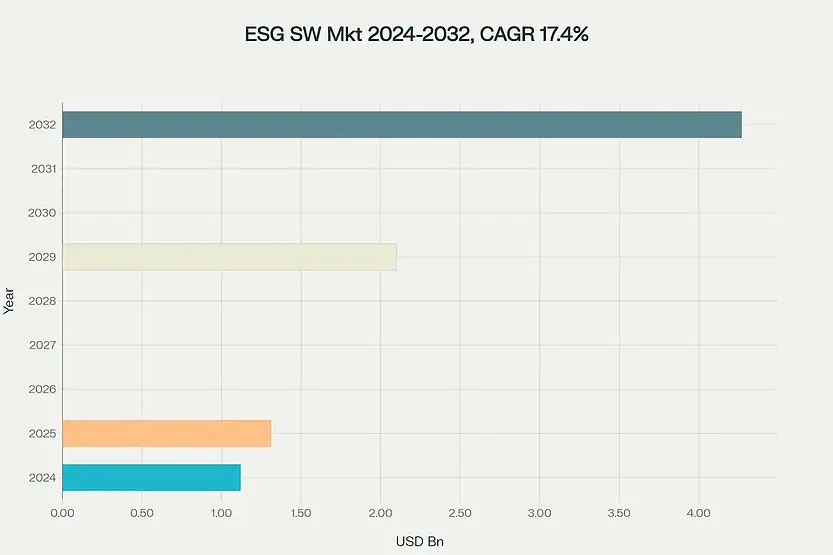
The market for ESG software has exploded: from USD 1.12 billion in 2024, it is projected to grow to USD 4.27 billion by 2032 – an annual growth rate of 17.4%. These figures clearly demonstrate that ESG in procurement is no longer a niche discipline, but is becoming a key business driver.
For purchasing managers, this means they must not only implement ESG compliance but also actively shape it. Purchasing is becoming the central hub of corporate sustainability – with far-reaching implications for supplier networks, internal processes, and financial control mechanisms.
ESG in purchasing – a brief overview for decision-makers
- ESG compliance requires clear purchasing processes – from risk assessment to auditable supplier selection.
- Supplier sustainability is critical to success – with risk-based assessment and targeted development of strategic partners.
- CO2 footprint and environmental impacts belong in the product group strategy – not just in the reporting.
- Social responsibility and governance protect business viability – through prevention, transparency and commitment.
- Without operational standards, there is no ESG impact – digital tools like FACURA ensure compliance even for special requirements.
1.1 The regulatory landscape 2024/2025
The LkSG (Local Government Services Act) is expanding its scope: Since 2024, companies with 1,000 employees (instead of the previous 3,000) have been required to comply with due diligence obligations. This affects approximately 2,900 German companies, which must submit their annual report to the BAFA (Federal Office for Economic Affairs and Export Control) by April 30th. Violations can result in fines of up to 2% of annual turnover and exclusion from public tenders for up to three years.
The CSRD will come into force in stages: The first companies will be required to report from 2025, followed by other large companies with over 250 employees from 2028. Over 42,500 EU companies and several thousand non-EU companies are affected. The reporting obligation explicitly covers Scope 3 emissions along the entire supply chain.
1.2 Market dynamics and investor pressure
90% of S&P 500 companies already publish ESG reports, and the demand for ESG-compliant suppliers is growing exponentially. In 2022, 21% of UK retailers terminated contracts worth $9.6 billion with suppliers who failed to meet their sustainability standards. These figures demonstrate that ESG compliance is not just a regulatory obligation, but a business necessity.
2. Integrate ESG compliance into the procurement process
ESG compliance doesn’t begin with reporting, but with concrete requirements for processes, structures, and control systems. The challenge is real: only 9% of companies fully report on their Scope 1, 2, and 3 emissions. In industrial procurement, this primarily affects:
Risk assessment of suppliers and product groups: Companies must systematically assess which parts of their supply chain pose environmental, social, or governance (ESG) risks. This ranges from child labor in raw material extraction to inadequate environmental standards among suppliers. Modern ESG due diligence processes utilize AI-powered risk analyses that evaluate and continuously monitor over 150,000 public sources.
Contractual safeguards: ESG-relevant requirements must be incorporated into purchasing contracts – including escalation mechanisms for violations. Companies are increasingly relying on bonus-malus models where ESG performance directly influences contract terms.
Documentation requirements: Purchasing departments must be able to demonstrate how they identify, assess, and minimize risks. This requires a robust database and auditable processes. The requirements are specific: Annual risk analyses, preventative measures, complaint mechanisms, and complete documentation are legally mandated.
These requirements cannot be met using a checklist. Rather, close coordination with compliance, legal, quality management and – last but not least – the specialist departments is necessary.
2.1 Modern technologies for ESG compliance
AI-powered ESG analytics tools are revolutionizing compliance processes: They enable real-time monitoring, predictive risk analysis, and automated supplier assessments. Blockchain technology creates immutable records for supply chain transparency and allows for the verification of sustainability claims.
Digital twins of the supply chain combine IoT sensors with AI algorithms to continuously monitor environmental data, working conditions, and governance indicators. This enables unprecedented transparency and proactive risk mitigation.
3. Strategic realignment: Sustainable procurement as a corporate goal
A sustainable procurement strategy is not an add-on module, but must be part of the overarching corporate strategy. The transformation is measurable: 50% of leading sustainability programs use integrated ESG data to inform managers operationally or to engage them strategically. At its core is the systematic integration of environmental and social criteria into target, supplier, and material group strategies.
Key control variables include:
Product groups with critical ESG relevance include, for example, energy-intensive intermediate products, electronic components from Asia, packaging, and textiles. The chemical industry, for instance, has already developed industry-specific PCF (Product Carbon Footprint) guidelines that define detailed calculation standards for Scope 3 emissions.
Regional risk assessment: a combination of geopolitical factors, ESG governance quality, and transparency. New laws, such as the US Uyghur Forced Labor Prevention Act, are tightening requirements: companies must prove that their products were not manufactured using forced labor.
Internal incentive systems: Sustainable procurement is only truly practiced when it is part of the target systems of buyers, product managers, and executives. McKinsey studies show that over 70% of procurement leaders prioritize the visibility of company-wide spending, with ESG at the heart of these efforts.
It’s clear: Only those who consider ESG criteria in the early sourcing phase can implement sustainable solutions at no extra cost or even at a profit. Subsequent measures are usually expensive and inefficient.
3.1 Circular Economy in Procurement
The integration of circular economy principles is becoming the new standard: companies are evaluating suppliers not only on their direct environmental impact, but also on their contribution to the circular economy. This includes the use of recycled materials, product take-back programs, and the development of modular, repairable designs.
Regenerative procurement goes beyond sustainability: Instead of just minimizing damage, companies select suppliers who generate positive environmental impacts – for example through soil regeneration in agriculture or biodiversity promotion.
4. Supplier sustainability: systematically assess, strategically develop, and strategically bind suppliers.
An industrial company’s ESG performance hinges on the sustainability of its suppliers. The figures are clear: Scope 3 emissions in the supply chain are on average 26 times higher than direct operational emissions (Scope 1 and 2). Since the vast majority of environmental and social impacts originate in upstream stages of the supply chain, a key task for procurement is not only to assess the sustainability performance of its partners but also to actively shape it
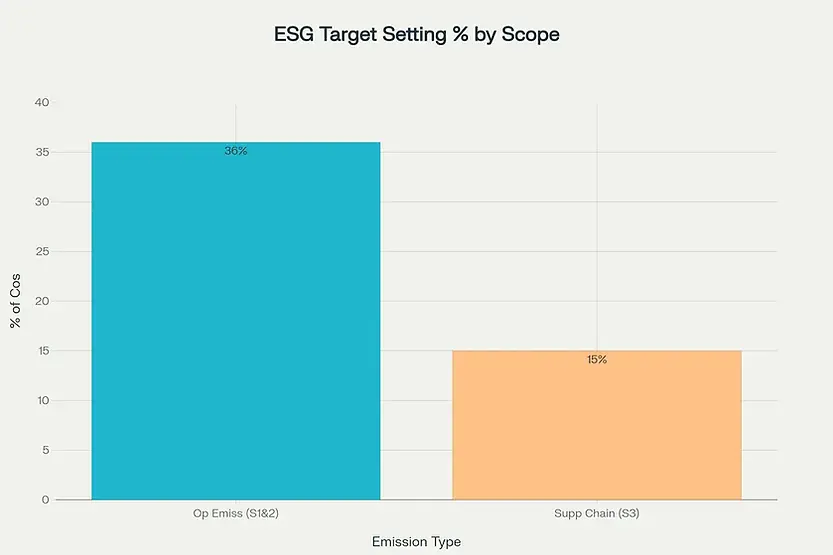
However, reality reveals a drastic discrepancy: While companies are 2.4 times more likely to set operational emissions targets, only 15% have defined Scope 3 targets. This highlights the immense gap between awareness and action.
4.1 Assessing supplier sustainability – more than just checkboxes
An effective sustainability rating begins with a differentiated risk assessment. Modern ESG rating platforms like EcoVadis have evaluated over 150,000 companies in more than 250 sectors and 185+ countries. Criteria such as region of origin, product category, company size, and previous audit results should be considered. Different measures are required depending on the risk profile.
Low-risk suppliers can be involved via standardized self-assessments (e.g., ESG questionnaires, compliance declarations).
Medium-risk partners require additional documented evidence, such as certificates (e.g., ISO 14001, SA8000) or reports (e.g., EcoVadis Scorecards).
High-risk suppliers must be actively audited or integrated into ESG development programs. Experience shows that companies save 80% of the costs compared to internal ESG programs when they rely on established platforms.
The key is that this assessment must be systematic, repeatable, and auditable – independent of individuals and manual evaluations. Without a clear methodology, there is a risk of opacity, inconsistencies, and compliance issues.
4.2 Supplier development – ESG not just demanded, but enabled
Assessment alone is not enough. Successful programs show impressive results: 2 out of 3 suppliers improve their ESG performance in the second assessment. Strategic suppliers with ESG deficits, in particular, should be specifically developed – for example, through:
- Training on environmental protection or labor standards
- Joint action plans with defined target values
- Technical or financial support for certifications
- Digital platforms for knowledge transfer: Modern solutions offer multilingual training modules and intelligent workflows for sustainable supplier management.
This cooperative approach requires resources – but it pays off: Companies with ESG-strong suppliers benefit in the long term from more stable relationships, lower risks and better resilience to regulatory changes.
4.3 Integration into purchasing decisions – ESG as an award criterion
Sustainability must not be an add-on, but systematically integrated into procurement processes. Progressive companies are already using carbon pricing in AI-supported procurement decisions, which automatically gives preference to low-CO2 suppliers.
That means:
- ESG criteria with quantitative weighting in bid evaluations
- Exclusion of suppliers with serious ESG violations
- Bonus-malus models in existing contracts
- Automated sustainability risk assessment through AI systems that continuously monitor suppliers during the evaluation process.
A purely price-driven approach to awarding contracts contradicts modern compliance and sustainability requirements. Companies that establish ESG as an integral part of their supplier evaluation early on are better protected against reputational risks – and secure competitive advantages in public tenders or with ESG-oriented investors.
4.4 Creating transparency – technology as an enabler
Supplier sustainability is data-driven. Only 56% of suppliers provide emissions data, highlighting the challenge. Effective supplier management is impossible without the structured collection, maintenance, and analysis of relevant ESG data.
Modern technologies are revolutionizing data collection:
- IoT sensors provide granular real-time data on energy consumption, shipping efficiency, and waste production.
- AI-powered platforms analyze supplier risks, predict disruptions, and optimize logistics for lower emissions.
- Blockchain technology creates immutable records of sustainability claims.
Tools such as supplier portals, risk analysis platforms or ESG dashboards help to centrally collect and make information accessible – also for audits or internal reports.
Standardization is crucial: Uniform ESG criteria, harmonized assessment methods and regular data updates create the basis for manageable sustainability in the supply chain.
5. Environmental impact and carbon footprint: establishing ecological transparency in the supply chain
The greatest environmental impacts of industrial companies often do not originate in their own factories, but in the upstream supply chain – through raw materials, transport, prefabrication, or packaging. The figures are dramatic: For companies in the food industry, upstream emissions contribute between 60% and over 90% of total emissions. Organizations report that their supply chain emissions are, on average, 11.4 times higher than their direct operational emissions.
Anyone who wants to understand and control the ecological footprint of a product or group of goods must therefore look deeper: into Scope 3 emissions, process energies, material origins and disposal routes.
This presents a double challenge for purchasing managers: On the one hand, they must collect valid environmental data, and on the other hand, they must integrate this data into strategic and operational decisions.
5.1 Systematically record Scope 3 emissions
Scope 3 emissions are the biggest challenge: they account for an average of 75% of a company’s total emissions, yet only 30% of companies report that their ESG integration into procurement processes is “very or extremely effective”. Scope 3 encompasses all indirect emissions along the value chain – i.e., transport, intermediate products, business travel, waste, use, and disposal of products. The following categories are particularly relevant for procurement:
- Purchased Goods & Services: Emissions from the production of the purchased goods.
- Upstream transport: CO2 emissions from delivery routes, especially air or truck transport.
- Consumer and packaging materials: e.g., disposable packaging, plastic content, recyclability.
The complexity is enormous: Accenture research shows that in most industries, the majority of upstream emissions originate from suppliers beyond Tier 1. In sectors such as aerospace, high-tech, and automotive, approximately 80% of upstream emissions come from suppliers beyond the first tier.
Digital tools are increasingly being used for data collection, linking emission factors from databases (e.g., Ecoinvent, DEFRA) with actual purchasing data. Modern platforms utilize AI-supported emission factor assignment and life cycle analyses for greater accuracy. Alternatively, some suppliers provide their own CO2 values – provided they operate a structured environmental management system.
5.2 Integrating environmental data into purchasing decisions
The provision of CO2 footprint data will become mandatory from 2024: Leading companies such as UPM already require their suppliers to provide annual product carbon footprint (PCF) data according to recognized standards such as the GHG Protocol Product Standard or ISO 14067.
Knowledge about a product’s environmental impact must inform concrete purchasing decisions. This means:
- Introduction of eco-criteria in tenders: e.g., specifications regarding CO2 footprint, energy consumption, water intensity.
- Assessment of environmentally related life cycle costs: that is, not only acquisition costs, but also environmental costs throughout the usage and disposal phases.
- Labeling of emission-intensive product groups: for targeted avoidance or substitution strategies.
AI-powered procurement tools are automatically programmed to prioritize sustainability KPIs alongside costs and efficiency. Purchasing should also collaborate with R&D and production to identify sustainable product alternatives early on – such as lighter materials, modular components, or renewable raw materials.
5.3 Actively involve suppliers
Collaborative approaches are showing measurable success: Companies that focused more on supplier engagement in 2024 reported significant progress in reducing their Scope 3 emissions. A product’s environmental performance is inextricably linked to the supplier’s capabilities. To achieve progress, companies must define and operationalize environmental targets together with their suppliers.
Possible approaches:
- Oblige suppliers to create their own CO2 balance sheets (e.g. according to the GHG Protocol)
- Setting product-specific emission limits for new contracts
- Incentives through bonus schemes or preferential treatment in awarding contracts
- Provide free CO2 accounting tools for suppliers to lower barriers to entry.
Blockchain integration enables continuous, real-time verification of suppliers’ sustainability data. Ongoing collaboration is crucial – moving from simple self-assessment questionnaires to genuine improvement programs with measurable results.
5.4 From balance sheet to control: Environmental KPIs for purchasing
The transformation of procurement KPIs has begun: Classic procurement KPIs such as “cost per unit” or “on-time delivery” are no longer sufficient in an ESG world. Bloomberg NEF predicts that 90% of procurement professionals will require proof of carbon neutrality from suppliers by 2025. A second set of performance indicators is increasingly becoming established, for example:
- CO2 intensity per product group or per euro of purchasing volume
- Share of low-emission suppliers in the portfolio
- Environmental certification rate (ISO 14001, EMAS etc.)
- CO2 savings through substitution or optimization
- Percentage of recycled/recyclable materials
Practical application: BASF, for example, has been the only industrial company worldwide to publish a comprehensive Corporate Carbon Footprint report since 2008, which breaks down all Scope 3 categories along the value chain in detail.
These key figures not only help with ESG reporting, but also with internal management and communication with management, investors and customers.
6. Operationalizing social responsibility and governance in global supply chains
Global supply chains harbor significant social and ethical risks – from exploitative child labor in raw material extraction and opaque subcontractors to systematic corruption. Regulation is becoming dramatically stricter: The US Uyghur Forced Labor Prevention Act intensifies enforcement and requires companies to implement rigorous traceability systems. For industrial purchasing organizations, this means that social responsibility and corporate governance are no longer mere ethical platitudes, but economically relevant areas of action with clear compliance requirements.
Penalties for violations are severe: Companies that fail to comply with supply chain laws face fines of up to $250,000 and personal liability for executives. Rising fines and penalties for ESG violations could have significant financial repercussions for businesses in the coming years.
Sustainable procurement must demonstrate that it protects human rights, upholds labor standards, and ensures corporate integrity throughout the supply chain. This requires robust processes, clear criteria, and international cooperation.
6.1 Enforcing human rights and labor standards
The risks are diverse and geographically concentrated: Key social risks in global supply chains include:
- Violations of core labor standards (ILO standards): e.g., child labor, forced labor, discrimination, lack of freedom of association
- Unsafe working conditions: lack of occupational safety, excessive working hours, inadequate pay
- Unclear employment relationships with subcontractors and temporary employment agencies
Modern technologies are revolutionizing monitoring: AI-powered document verification and traceability tools provide real-time alerts for supply chain risks such as forced labor violations. Blockchain technology enables the authentication of sustainability claims and the creation of immutable records of ethical procurement.
Industrial purchasing must ensure that these risks are systematically identified and assessed – especially in high-risk regions or for critical product groups.
Practical measures:
- Binding Supplier Codes of Conduct, signed by each supplier
- Social audits by internal or external auditors in cases of suspected wrongdoing or high-risk suppliers
- Establishment of a reporting structure for violations (e.g., whistleblower hotline)
- Use of AI-based risk analyses that continuously evaluate over 150,000 public sources.
Furthermore, violations should be clearly sanctioned – up to and including exclusion from the supplier network.
6.2 Minimizing governance risks – corruption, compliance, transparency
The EU’s Corporate Sustainability Due Diligence Directive (CSDDD) strengthens the requirements: companies must map their suppliers, assess risks, and implement corrective measures. In addition to social aspects, corporate governance is also coming into sharper focus. Typical risks include:
- Corruption and bribery in purchasing decisions
- Conflicts of interest between buyers and suppliers
- Lack of transparency in ownership structures (e.g., in offshore companies)
A consistent governance system is crucial here. This includes:
- Integrity checks on new suppliers (e.g., ownership structure, compliance cases)
- Training of the purchasing organization on anti-corruption, conflicts of interest and internal reporting obligations
- Separation of purchasing and testing processes to prevent manipulation
- Digital traceability: Blockchain-based supply chain documentation or certified supplier databases
Practical implementation: Modern ESG platforms like Sedex enable global collaboration in ethical trade with members in more than 150 countries and reduce audit duplicates and compliance costs.
6.3 Integration into purchasing strategy and risk management
ESG risks must be systematically integrated into company-wide risk management. Social and governance risks should not be considered in isolation, but must be an integral part of company-wide risk management. The 84 ESG regulatory changes in the last two weeks alone illustrate the dynamic nature of the regulatory landscape.
Purchasing managers should:
- Regularly update risk analyses along the supply chain
- Align sanctions and escalation mechanisms with compliance and legal requirements.
- Integrating social and governance criteria into the ESG scorecard for suppliers
- Implement preventive measures that go beyond reactive compliance
In particular, under the Supply Chain Due Diligence Act (LkSG), systematic prevention measures, complaint management and documented correction processes are legally required – violations can result in fines and reputational damage.
7. Operational excellence as a prerequisite for ESG implementation in procurement
Strategies, guidelines, and ESG targets only become effective when they can actually be implemented in daily procurement practice. However, reality reveals significant gaps: studies show that maverick buying can account for up to 80% of procurement spending, while 20% of large companies identify this as a very challenging problem.
In many industrial companies, the operational reality is characterized by heterogeneous processes, non-integrated systems and a lack of transparency – especially in the area of so-called special requirements or irregular orders outside of standardized framework agreements.
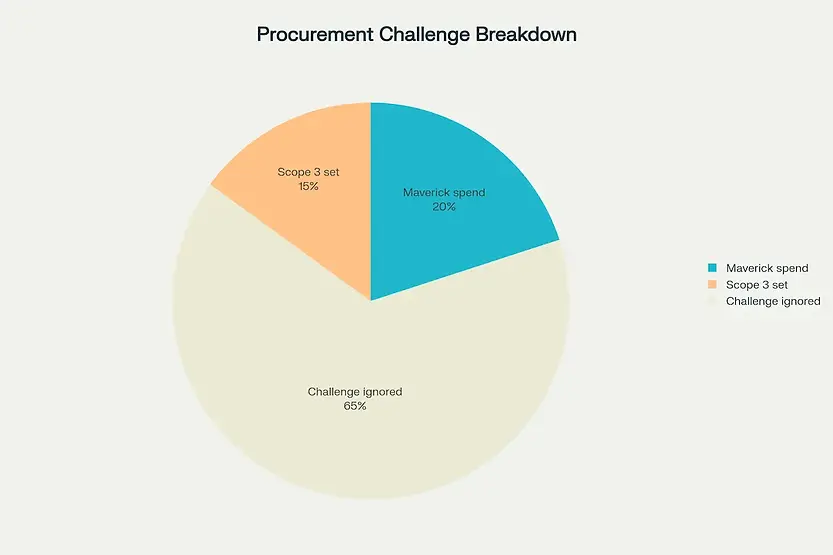
Therefore, effective ESG implementation in procurement requires not only content but also stable structures: standardized processes, digital tools, and consistent governance throughout the entire procurement cycle.
7.1 Process standardization as an enabler for ESG compliance
Maverick buying systematically undermines ESG goals: Unclear purchasing processes are one of the main reasons why ESG requirements are often circumvented or forgotten in practice. The costs are considerable: Organizations with higher levels of maverick buying require 16 more hours to issue a purchase order and pay $2.58 more per $1,000 of purchasing volume. For a company with $1 billion in annual purchasing, this translates to over $2.5 million in additional procurement costs.
This applies especially to:
- Decentralized procurement via unauthorized channels (“Maverick Buying”)
- Undocumented one-off suppliers, e.g. for C-parts or short-term project requirements
- Opaque ordering processes outside the ERP system
Modern process analysis systematically uncovers weaknesses: Process mining tools can automatically identify maverick buying by detecting orders without prior requests or direct invoices without purchase orders. Such weaknesses not only jeopardize economic efficiency but also compliance with regulatory requirements – for example, regarding supplier documentation, traceability, or reporting obligations.
A consistent, audit-proof ordering process is therefore not only economically sensible, but also an ESG requirement.
7.2 Digital tools for ensuring process and ESG compliance
The market for sustainability platforms is exploding: In 2024, the market for sustainability platforms reached USD 1.3 billion and is projected to grow to over USD 3.7 billion by 2029, with a CAGR of 23%. Technology plays a central role in embedding ESG criteria in operational procurement. The goal is to consolidate data from various systems, enable automation, and establish control mechanisms.
Relevant functions include, for example:
- Supplier selection that complies with specifications directly in the purchasing system
- ESG-relevant mandatory fields in order entry (e.g. origin, certificates)
- Automated documentation and archiving of all transactions
- AI-supported sustainability risk assessment in supplier evaluation
Practical solutions: One example of such a solution is the use of centralized procurement platforms, where even special requirements are handled systematically – without creating new vendors, yet still documented, consolidated, and with standardized documents. Providers like FACURA make this possible through integration into existing processes, without requiring ERP adjustments.
Advanced technologies include:
- Blockchain-based supply chain documentation for immutable sustainability records
- IoT sensors for real-time monitoring of environmental parameters
- Automated ESG scorecards with machine learning for pattern recognition
Even if ESG is not explicitly the focus of such platforms, they contribute significantly to the structural prerequisites for ESG compliance: through transparency, standardization and central controllability.
7.3 Organizational prerequisites – roles, training, governance
Technology alone is not enough: Operational ESG implementation also requires personnel and organizational clarity. Nearly 60% of high-performing CPOs are formally measured against compliance and risk management KPIs, underscoring the importance of structured governance.
ESG responsibilities in procurement: clear role distribution, aligned with compliance and sustainability.
Training programs for purchasing teams: e.g., on CO2 accounting, ESG audits, legal requirements
Internal guidelines and process descriptions that specifically operationalize ESG requirements
Digital adoption platforms like Whatfix offer contextual help and step-by-step guidance for complex ESG procurement processes.
Modern compliance metrics include:
- Compliance rate: Percentage of contracts that comply with all ESG guidelines
- Supplier Sustainability Score: Measuring suppliers’ achievement of ESG targets
- Time to compliance: Average duration for ESG-compliant procurement processes
The better ESG goals are integrated into everyday purchasing practices, the greater their actual impact – not just on paper, but in the real supply chain.
8. Conclusion: ESG is a strategic imperative – and an operational touchstone.
ESG in procurement is not a passing fad, but a paradigm shift. The numbers speak for themselves: The ESG software market is growing at 17.4% annually, 90% of S&P 500 companies publish ESG reports, and Scope 3 emissions are on average 26 times higher than direct operating emissions. At the same time, there is a massive implementation gap: Only 15% of companies have set Scope 3 targets, while 80% of procurement volume can potentially be classified as maverick buying.
Purchasing managers are responsible for strategically shaping and operationally implementing this change. The consequences of non-compliance are drastic: fines of up to 2% of annual turnover from the UK Retail Trade Standards (LBS), exclusion from public tenders, and 21% of UK retailers have already terminated contracts worth USD 9.6 billion with non-sustainable suppliers.
This requires more than good intentions: robust processes, clear governance, reliable data – and above all, the will to change.
Extended recommendations for action:
Integrate ESG criteria into purchasing guidelines and supplier negotiations in a binding manner.
- Implementation of AI-supported ESG risk analyses for continuous supplier monitoring
- Blockchain-based verification of sustainability data
- Automated carbon pricing mechanisms in procurement decisions
Systematically record and promote supplier sustainability
- Use of established platforms (EcoVadis, Sedex) for standardized assessments
- Development of collaborative improvement programs with measurable goals
- Providing free sustainability tools for suppliers
Analyze Scope 3 emissions and implement reduction measures
- Conducting multi-tier emission hotspot analyses
- Implementation of product-specific CO2 limits for new contracts
- Integration of environmental KPIs into purchasing performance measurements
Further training and empowering purchasing teams in ESG topics
- Development of ESG-specific compliance metrics and dashboards
- Training in modern ESG assessment technologies and methods
- Establishment of internal ESG competence centers with clear responsibilities
Standardize operational processes and support them with ESG-compliant tools
- Elimination of maverick buying through process mining and centralized platforms
- Implementation of consistent ESG documentation requirements
- Using digital adoption tools for complex ESG procurement processes
Strategically using new technologies
- IoT sensors for real-time monitoring of supply chain environmental parameters
- AI-based predictive sustainability analyses
- Digital twins for holistic supply chain optimization
Proactively monitor regulatory developments
- Development of systematic compliance tracking systems for ESG regulation
- Preparing for expanded CSRD requirements and further tightening
- Integration of global ESG standards (TCFD, SASB, GRI) into procurement processes
Only those who fully integrate ESG into their procurement practices will be able to operate sustainably, maintain a secure reputation, and comply with regulations. The time for superficial compliance measures is over – the future belongs to companies that understand ESG as a strategic competitive advantage and master it operationally.